Paper or Fabric for a Small Collage?
Paper or fabric for a small collage? Compare surface, texture, and handling to choose materials that support your image without fighting its details.
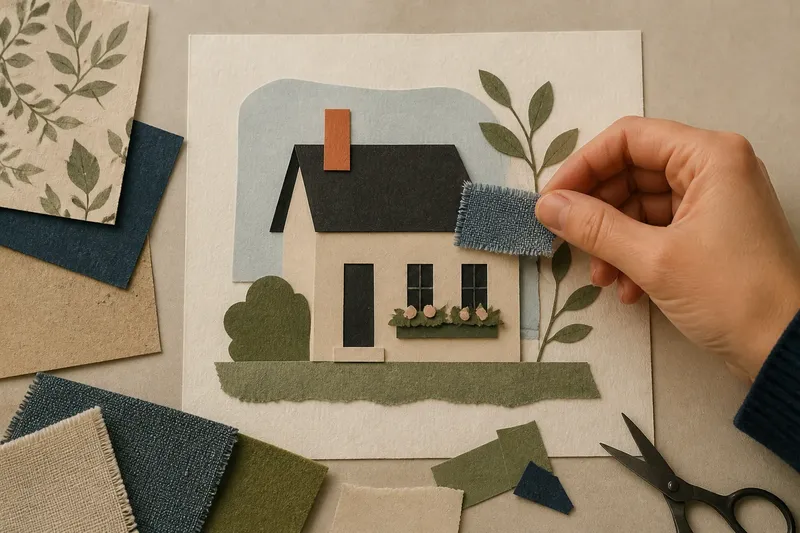
The common mistake in choosing paper or fabric for a small collage is picking the more appealing scrap before considering the image; the cost is a surface that overwhelms fine details or makes the piece awkward to assemble. Paper or fabric for a small collage is best decided by asking what the viewer should notice first: crisp shapes, visible fibers, or a deliberate contrast between them.
Start with the focal effect
A small collage gives each edge and texture more visual weight than a larger composition. A broad fabric weave can become the main feature, while a clean paper edge can make a tiny shape feel precise. Choose the material that supports the focal point rather than competing with it.
Paper generally suits flat, sharply defined imagery: lettering, narrow silhouettes, maps, line drawings, and layered color fields. Its surface can be smooth or visibly fibrous, but it usually cuts and folds into an edge that reads clearly.
Fabric brings a softer, more tactile impression. Woven cotton, felt, denim, and sheer cloth each behave differently, but they tend to introduce fibers, weave, drape, or thickness that remain visible in the finished work.
Choose paper for precision
Pick paper when the composition depends on a clean contour or a compact arrangement of small pieces. Magazine pages and colored construction paper offer distinct printed or solid-color areas; drawing paper and thin handmade paper can contribute subtle surface variation without the pronounced weave of cloth.
Paper is also a good fit when you want layers to sit close to the support. Lightweight sheets can overlap without forming bulky ridges, which helps preserve legibility in a small image. Stiffer paper may hold a cut shape firmly, though a very thick piece can cast a noticeable edge shadow.
Consider paper’s visual behavior as well as its cut. A printed fragment can carry words or imagery that remain legible after trimming, so check what the crop leaves behind. If the collage needs a quiet background, choose a fragment with fewer competing marks rather than relying on a tiny crop to erase them.
Choose fabric for touch
Pick fabric when softness, warmth, or a visible textile surface belongs in the image. Cotton can read as familiar and matte, felt offers a dense, fuzzy face, and sheer fabric can let underlying color show through. These are different effects, not interchangeable versions of “texture.”
Fabric often makes sense for a larger, simple shape rather than a tiny, intricate one. Loose fibers can blur a narrow cut, and a weave may distort when the piece is pulled or pressed. A broad patch, soft silhouette, or curved form can make those qualities feel intentional.
Think about the edge before cutting. Some woven cloth frays, while felt does not unravel in the same way; a raw edge can either add a loose fringe or distract from a crisp outline. If the edge itself matters, use a small offcut to see how the material behaves before placing it in the composition.
Match the surface?
Which material suits fine detail?
Paper is usually the easier choice for tiny lettering, narrow lines, and intricate silhouettes because it can hold a clearer contour. Fabric can still work for a small detail if the shape is broad enough to remain recognizable despite its weave or fibers.
Which material makes a collage feel softer?
Fabric tends to make an image feel more tactile and less sharply edged, especially when its weave or nap is visible. Paper can feel gentle too, but its softness comes more from color, grain, and layering than from a textile surface.
Can paper and fabric be combined?
Yes, if their roles are distinct: paper can carry the precise shape while fabric supplies a tactile accent, or the reverse can work when the textile form is the main subject. Keep their edges and visual weight in mind so the contrast reads as deliberate rather than crowded.
What should be checked before attaching either?
Check whether the adhesive and support suit the chosen material, and follow the product label or manufacturer instructions. Also check whether the piece shifts, wrinkles, frays, or shows unwanted marks against the support before committing it to the final arrangement.
Decide by handling
For a small collage, the material must not only look right but also stay manageable at the scale of the work. Paper usually lies flat and keeps its shape during placement; fabric may flex, stretch, or bunch, which can help create softness but complicate alignment.
Say you are making a tiny collage of a house with narrow windows and a straight roofline. Paper would likely suit the house’s crisp geometry, while a small fabric curtain or roof patch could add one tactile accent without softening every edge.
Imagine instead a small image centered on a folded leaf or a rounded, cushion-like form. Fabric may support the intended softness better than a perfectly flat paper cutout, while paper remains useful for a sharply defined stem or border.
For a mixed-material piece, decide which material carries the main shape and which provides contrast. If both scraps are highly textured or strongly patterned, their surfaces may compete; a quiet paper beside a pronounced fabric weave, or a plain textile beside printed paper, can make the pairing easier to read.
Make the final choice
Before attaching anything, place the scraps on the support and view them at the distance the finished work will usually be seen. Notice whether the edge, pattern, or texture attracts attention before the subject does. If so, simplify the fragment, choose a calmer surface, or assign that material a smaller role.
Choose paper for precision, flat layering, and readable small marks; choose fabric for tactile presence, softness, and a textile-specific surface. Paper or fabric for a small collage is not a contest between materials: the right choice is the one whose edge and texture help the intended image stay clear.
Keep a few offcuts from the same source beside the finished piece. They let you compare texture and color later if you extend the collage, without introducing a material that looks similar in isolation but behaves differently beside the original.